Who do I pay?
Put simply, if you pay a worker, you must also pay their Super Guarantee (or SG) - which is what the compulsory superannuation contributions you pay into their super fund is officially called.
Generally, every worker aged 18 years or over qualifies for super. If they’re under 18, they must work more than 30 hours a week to qualify. Temporary residents like backpackers and overseas students are also eligible for super contributions.
It doesn’t matter whether the employment arrangement is full-time, part-time, or casual – they’re entitled to employer super payments. Plus, if you pay contractors mainly for their labour - they may also be entitled to super, as they’re categorised as employees for SG purposes.
How do I calculate how much super to pay and when?
The current SG rate is 12%. This means that, as an employer, you’ll need to pay a minimum 12% of each eligible worker’s qualifying earnings, a new term that brings together ordinary time earnings (OTE) and other payments such as commissions and eligible salary sacrifice amounts. For many employers, the new concept of QE doesn’t change the amount of SG being paid, however the timing of payments is likely to change. Under Payday Super laws, employers need to pay SG contributions at the same time as salary and wages, rather than once every quarter.
If your employees are covered by an award or employment agreement that specifies a super contribution higher than 12%, you must pay that higher amount.
What happens if I don’t pay an employee’s super?
If you don’t pay your employee’s SG amount in full, on time and to the right super fund, your business will need to pay the SG charge.
This mistake can be costly, because you may need to pay:
- the SG shortfall, or the amount outstanding at the time of the ATO assessment, additional notional earnings, calculated using the general interest charge rate, calculated daily
- An administrative uplift amount of up to 60% of the shortfall amount, which may be reduced by voluntarily disclosing non-payment prior to the ATO assessment. A choice loading if choice of fund requirements have also not been met.
More information is available on the ATO website here.
How do I pay?
A super clearing house lets you make a single online payment that covers super contributions to all your employees across multiple super funds.
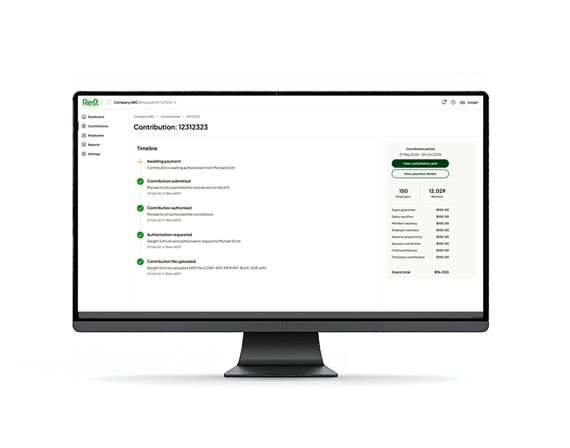
Rest Pay
Rest's feature-filled clearing house that helps you adapt to the government’s Payday Super legislation.
- No cost for Rest default employers
- Payday Super ready
- Compliance made easy
- Enhanced security protection to help protect your data
- Helps process contributions faster
- Easy to use
Payday Super legislation
The government’s Payday Super laws came into effect on 1 July 2026, and employers are no longer able to submit contributions through EmployerAccess, SCH Online or the ATO’s Small Business Clearing House Online. All employers using these platforms therefore need to switch to another platform to continue making super contributions.
Looking for a default Super Fund?
Rest does not issue or arrange the issue of SCH Online products and/or services. Rest does not recommend, endorse or express an opinion about SCH Online. As such, Rest does not accept liability for any loss or damage you incur in connection with your reliance on SCH Online. Rest does not receive any commissions or other benefits from Pacific Custodians Pty Limited as a result of your use of SCH Online.